Showing posts with label Beistegui. Show all posts

10/3/12

Evoking Reactions

By: Tyler Norton


What should be the main goal that architecture aims to accomplish? Adolf Loos once said, “Architecture arouses sentiments in man. The architect’s task therefore, is to make those sentiments more precise.” Some would disagree with Loos. Many think that sustainability, function, and form, among others, should be the main focus. While these are all important aspects of architecture, I agree with Mr. Loos. Architecture should be all about tailoring to people’s wants and needs and seeking a reaction from each individual who experiences the building. Without the individual, there is no reason for architecture to exist. There are plenty of examples of buildings that do just that and each architect accomplishes this fundamental goal in different ways.

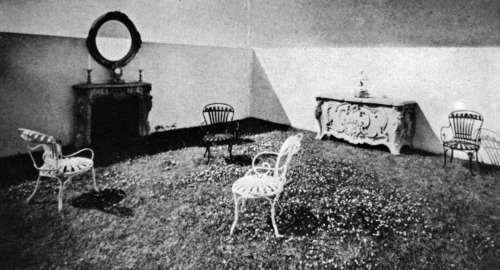
One building that does a beautiful job of triggering a reaction is Le Corbusier’s Beistegui apartment. This work has a distinct surrealist style, especially the garden area. By definition, the aim of surrealism is to evoke emotion by stimulating the subconscious. The Beistegui garden does this in multiple ways. For instance, surrealism focuses on the incorporation of spontaneity, the emphasis on irrational, and representing things as they usually aren’t. The fireplace located in the garden meets all of these qualifications. The fireplace is irrational because a fireplace would never actually be found outside except in surrealist architecture. Le Corbusier generates a reaction from the individual by provoking the subconscious through surrealism.

Although it is not technically architecture, Maurice Nio’s 2004 Touch of Evil project is another example of architects evoking reactions from the public. The point of this project was to give expression to the technical spaces throughout cities and to bring life to a normally anonymous space. The red plastic covering the otherwise completely gray space provides and unexpected relief from the normally monotonous continuity of the city’s technical space. This evokes surprise from the viewer and invites creativity and imagination. As mentioned in class, the structure could not be changed; it just had to be added to. Therefore, Nio had to get creative. Instead of changing the architecture, he had to change the way people perceived the space. As well as provided unexpected relief, he also added the sense of touch to the experience. People are able to feel the texture of the red covering, which in turn adds to the moment. All and all, the way that Nio artfully induces a reaction from the individual is by changing the perception of the area.
           

            The final example that I would like to talk about is the Moses Bridge by RO&AD architects. Aside from being inventive and aesthetically appealing, it is also a great example of architecture that creates a reaction. It is interesting even to people who have no background in architecture. It evokes emotion and delight from the visual aspect but it is also very well thought out and focuses on the local culture and history. The bridge was designed to be “invisible” because the area was originally a fort and the architects wanted to keep the idea of a moat separating the enemies. Another way that the bridge connects to the individual is the idea of Moses. With the Biblical reference, it further evokes emotion from the viewer.
           
            In conclusion, all three of these examples seek to create a reaction by stimulating the subconscious, changing perception, and evoking emotion respectively. This is important because the reaction of the viewer is what connects architecture to its target audience: the individual. Without the individual, architecture would have no purpose. That is why the main goal of architecture should always be to focus on the reaction of the person experiencing it.


 Sources:
http://www.landezine.com/index.php/2011/11/moses-bridge-by-road-architects/

9/30/12

Architecture According to the Landscape


 By: Francisco G. Zambrano

Fig.1: Personal quick sketch of the Moses Bridge.
     It's funny how things work out. Last week we talked about how architecture manipulates nature, and now this week we talk about how nature manipulates or rather influences architecture. The great part about this relationship is that the architecture is actually respectful of nature and tries to emphasize it. This is accomplished in many ways.

Fig.2: Beistegui Apartment view of Paris from rooftop.


Fig. 3: Hedge is down.
     We start with the Beistegui Apartments by Le Corbusier in Paris. In his task to try to hide some of the complications and impurities of the Parisian cityscape, he implements complicated machinery in order to filter and change the surrounding landscape. For example, on the roof garden, there are walls and hedges, which move electronically in order to hide or reveal parts of the surrounding cityscape (Fig.3). When one walks onto the roof top garden space, you are confused by the fact that there are furnishings that would normally be placed in a living room, yet are on the rooftop with a bright green grass floor. To top it off, you have the Triumphal Arch and the Eiffel Tower peaking up over the five foot white wall with the thin line of the surrounding mountain range along the top of the wall. The white wall manages to hide the complex cityscape yet keep in view the important monuments and the beautiful mountain range in sight. Then, when you are bored of the view or want to hide something, you simply move the architecture to do so.
    
Fig.4: The Moses Bridge in the Netherlands.
     It is interesting how one can emphasis nature. Le Corbusier did so by having architecture actually move in order to change the surrounding landscape. Now this is not always the case such as the Mosses Bridge in the Netherlands (Fig.4). This "bridge" literally hides itself in order to not interrupt the continuity of the moat or the simplicity of the site. When looking at the path from a certain distance, it literally is invisible, and as you approach it, the water and land slowly open up to reveal the a slit which is the bridge. What is amazing is that when seen from a distance, the bridge accomplishes to not interrupt the smooth current of the moat or the continuity of the land. This structure accomplishes to move you through a landscape that was only possible to do so in a story.
    
Fig.5: Blur as seen from afar.
     Another example of architecture, which tries to lessen the impact on its surroundings, is the Blur by the architects Elizabeth Diller and Ricardo Scofidio on Lake Neuchatel in Yverdon-les-Bains, Switzerland. Well, it is not that it wants to lessen its impact rather than the structure tries to blend in the landscape by mimicking a cloud of fog on the lake (Fig.5). From afar, that is what the structure looks like, a cloud of fog which rises and lowers depending on the temperature and either expands onto the lake or stays together in a stout cloud. The only way you can tell that it is a structure is by seeing the two bridges on which people walk on in order to enter the cloud. This structure allows people to experience what it is like to be in a cloud in the sky. Like the Moses Bridge, in a way, it allows people to be inside nature in a way that was only possible in stories.
    
     As seen in these projects, architects do not always want to shove architecture down natures’ throat, but try to blend the two together. I believe that in order for architecture to be more than great, it must take more than just queues from nature. It must respect and react with the surroundings’ like the Beistegui Apartments, the Moses Bridge and the Blur. These projects have done so and have even gone beyond by trying to blend with their surrounding.  

9/29/12

Le Corbusier, the Surrealist.


By Jordan Grant

Le Corbusier, a name inescapable in the study of architecture, is the topic of this next post- or, rather, to be more exact, his work on a Parisian apartment for eccentric millionaire Carlos de Beistegui. This work stands out from the fabric of Corbusier’s body of work as extremely unique since its design heavily relies on the eccentricities of the client, so it is important to understand Beistegui first before discussing Le Corbusier as a surrealist.

Beistegui came from a rich family with a history in art collections- his uncle’s collection is now displayed in the Louvre. He was a world traveler, well-studied and at the center of the social scene in Paris during his lifetime. He’s often regarded as one of the most flamboyant figures of the 20th century and his parties were considered some of the best Paris has ever seen. By the 1930s when Beistegui contacted Corbusier in regards to designing his penthouse apartment, he has already obtained a large number of surrealist portraits in his art collection, and perhaps his apartment itself can be considered one of the greatest works of surrealist art that the collector ever obtained.

Surrealism was a movement that began in the early 1920s with Paris regarded as the most important center of surrealist works.  This philosophical movement centered on the concepts of unexpected juxtapositions, non sequitur, and surprises. It sought to uncover the creative potential of the unconscious mind. As Salvador Dali mentioned himself, "Surrealism is destructive, but it destroys only what it considers to be shackles limiting our vision." When the concept is applied to architecture, it is allowed to break out of what is considered normal or necessary and become a work of art that creates an environment that removes the shackles that are limiting our vision.


Now, keeping both the client and the client's love of surrealism in mind, take a deeper look in to Corbusier’s work for Beistegui. I don't claim to be an expert of any sorts- rather, these are my own observations and ventures into guessing what they may mean. Perhaps the story is best told through photos; from the winding narrow staircases to the mirrors to the furniture, it’s surely a surrealistic experience. Corbusier’s intricate and technologically advanced additions to the house include a camera obscura in the form of a telescope and a movie screen for projection that lowers as a chandelier rises. However, the rooftop garden has always been considered the highlight of the penthouse, which is rumored to have been helped in the design by none other than famous surrealist Salvador Dali.

One of the first similarities that appears is the sparseness of landscape. The rooftop garden of the penthouse has been designed so that only two monuments appear in the skyline, something not often seen (especially from such great heights). It's similar to some of the works by Dali, in which a limited skyline is shown. The images below show the similarities of the limited skyline:


Another recurrent items is mirrors, a popular subject of surrealists. Whether the mirrors were placed by Beistegui or Corbusier I know not, but they strengthen the ties to surrealist art- where heads are often shown disconnected from the bodies similar to how a head appears to be floating in a mirror.


While I've only begun my research on Beistegui and his apartment, which is difficult to find as it is one of Corbusier's most underrated projects, I believe that it is a fascinating topic that ties together art and architecture of the time in the 1930s.

Sources:

http://www.rasa.net/writings/corbubeistegui.html

http://mondo-blogo.blogspot.it/2010_10_01_archive.html

9/26/12

How Architectural Design Moves Us, Literally


By: Chris Melton

Our third lecture in our Contemporary European Architecture class centered on "Moving Landscapes." This concept has two key points: How the user moves through the landscape, and how the idea of landscape has become mobile through architecture. For my blog post this week, I would like to discuss how architectural design should move the viewer through the project, and thus enhance the experience of the structure, and in turn, the site or landscape as well. Today I would like to explore this concept by analyzing two of Le Corbusier's works, and how they relate to this subject.

Our starting point this week was the architectural concept of the 'promenade,' which, at its core, is a starting point to move through an area. Promenades should lead the viewer to the area beyond through both views and vistas, or lack lackthereof. The first work I would like to discuss in its use of promenade is a particular work of Le Corbusier's. This work, which was an apartment commission for Charles de Beistegui, is a stark style deviation for Corbusier. Beistegui was an avid collector of art of the surrealist movement, and this apartment's design, whether through commission or initial design or a combination thereof, seems to reflect this surrealist movement at times, and perhaps played to the artist within 
Corbusier himself.


Surrealist aspects aside, the Beistegui apartment uses this concept of promenade throughout its structural design. As shown in the board above, the placement of thresholds throughout the apartment tends guide the user into the next area. Corbusier uses this in a few different ways. One example is by juxtaposing large openings next to smaller ones to promote a certain circulation that then creates both public and private spaces. Another example of this is done by his placement of staircases that either promote or demote movement to certain areas. The stylistic, spiral staircase below, pulls the viewer up to the first public rooftop area. This first area is a walled garden with select cut outs that give very specific panorama views of the site and city beyond. These allow the user to experience the specific vista that can only be viewed from that spot. Corbusier also crafted a second rooftop garden that is actually very different from anything else he has ever done. Using a second, separately styled staircase, he promoted a softer movement, that then created a more private space above. This second roof top garden, through both the high walls and furniture elements inside, is very surreal. With baroque furniture, a false fireplace, and a large mirror, this private area seems to be almost out of a surrealist painting itself, and is very quite interesting from this architect.


While the Beistegui apartment is a very interesting work to analyze, the best example of promenade would be Corbusier's design of Villa Savoye. Corbusier design uses this concept to not only pull the viewer through his structure laterally, but vertically as well. He designed the central stairway and ramp (shown above) to allow unseen light to flood down, and thus pull the user to the rooftop garden above. But, this is only one of his takes on promenade. Corbusier's use of his own five points on architecture in his plan of Savoye also led to the structure of the villa to become a promenade to the site around it. Not only does the design of Savoye pull the user through it, views from the interior leading the user to the next room, or garden (shown below), or etc; but the running windows, free plan below, and roof garden pull the viewer's eyes away from the beautiful structure that surrounds them, and into the site beyond. This, I think, is where Savoye's true beauty lies. The architectural design doesn't ever stop the viewer; instead it creates a rhythm that not only leads the viewer through the structure, but into the landscape beyond. The viewer never stops and focuses on one aspect for too long, as there is always another element yearning for attention, pulling on the senses. 


Through his use of promenade in his designs and his creation of these gathering spaces in the form of roof top gardens, I think that Le Corbusier is a great example for how architecture itself is 'moving landscapes.' The idea that promenade can lead the viewer through the structure, and craft such a specific yearning into the landscape beyond, plants the seed of movement through the landscape into the user's mind. An idea that won't go away until it is sated. The second idea, that landscape is mobile, can be seen in the form of both works' rooftop gardens. These hortos conclusus gardens have not only literally elevated the landscape, but have moved the nodes of the circulation to the roof. This promotes a need to stay, to experience, and to view the area beyond, that previously didn't exist. While Le Corbusier didn't ever physically move landscapes, his use of architecture design certainly changed how his patrons viewed and experienced the landscape of his sites; and through that fact alone, his designs were successful.

Simple Architecture With A Second Level


By Caroline Smith
Previously I have discussed the process of Deconstructivism exemplified by Peter Eisenman’s Memorial to the Murdered Jews in Berlin.  Last week I examined the way in which architecture could be the backdrop of a subject or an event in order to grab attention, thus adding a second level of complexity to the situation. This method could also be reversed so that the process of Deconstructivism, once again for architecture, depends completely on the subject as a backdrop. Now, with moving landscapes, the subject, which might be the landscape, inhabitants or vehicles that interact with the space, is the next level of complexity. This can be shown in a number of ways; by forcing a panoramic view, by responding to landscapes as they are, and by responding to the people, cars, etcetera that move through it.


            Le Corbusier best exemplifies the concept of using panoramic views as an element of architecture in the Beistegui Apartment, designed in 1929, where he leaves only a select point of view of the surrounding. The long, simple walls shape your view into a panoramic, drawing your eyes up to the cityscape in the distance so that architecture exists in its most basic form, while the subject of the landscape adds complexity to the space. The emotions evoked by this process are important because one can feel at peace in solitude while still integrated with the whole city.
 Another example of this I saw recently outside of Vicenza is Carlo Scarpa’s Brion’s Cemetery. The low back wall is simple and plain, drawing attention to a panoramic view of the beautiful mountains in the distance. The cemetery is a very quiet, personal place to reflect, aided by the beautiful views in the background, so once again; you may feel connected to what is surrounding the architecture.
            Many studies have been conducted in architecture in the past decade on the movement through landscapes and interactions with architecture. For example, Venturi studies how we perceive things from the car, since so many Americans spend a great deal of time in the car, in his book Learning from Las Vegas. These studies have alluded to new kinds of architecture that react to the movement of people and cars around and through it. Zaha Hadid and Roberto Burle Marx show evidence of this response to “the subject”, but the most efficient response I have found is Max Wan’s proposal for the Leidsche Rhein Master Plan. Similar to the emotions created in the Brion’s Cemetery and the Beistegui Apartment, Wan’s design allows the person’s experience to be his greatest priority. It provides safer, more comfortable pedestrian circulation around a city, while a partial underground highway would exist for cars only. This separation is a simple way to take the subject into account, allowing the movement of the people and cars to become the second level of complexity.
The Highline in New York designed by Diller Scofidio and Renfro sums up the way in which architecture can use the process Deconstructivism while allowing movement and landscape to add intricacy to a structure.  The bridge itself frames a panoramic view of the city forcing perspective and evoking connections between the city and its inhabitants similar to the first two projects. The purpose of the highline itself as a green space and a way for pedestrians apart from the street is a direct response to “the subject” of the city like Max Wan’s Master Plan proposal. It is important to know that we are always moving through landscapes and landscapes are always changing when designing architecture. In this way you can design something simple that will evoke great emotions and have a much deeper meaning when connected conceptually to what is around it.

9/14/12

Appeal of the Surreal

Appeal of the Surreal

By Sarah Wilson

A study of how surrealism works on the mind

“It is an irrational architecture which does not fall in with any ideas of comfort; it is figurative, even metaphorical. Its aim is to make habitable monumental pieces of sculpture, preferably representing creatures or objects.” (Sarane Alexandria 1985)

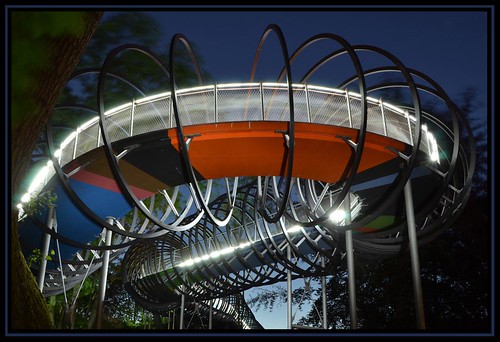
                We are attracted to odd things; it’s in our human nature to be curious. Architects like Le Corbusier, Tobias Rehberger, and Liz Diller & Ricardo Scofidio took advantage of this fact when creating some of their works, whether they were purposely creating under the label of ‘surrealism’ or not. Creations like Le Corbusier’s Beistegui Apartment,  Rehberger’s “Slinky Springs to Fame” pedestrian bridge, and Diller & Ricardo’s “blur” pavilion each have elements of surrealism that attract our eye, and those elements are successful for particular reasons.
Beistegui roof garden
                A glimpse at the roof garden in the Beistegui Apartment may summon an image from Alice in Wonderland. The seemingly ordinary living room, complete with seating, bureau, fireplace, and mirror, suddenly seems extraordinary when on realizes the material of the ‘carpet’. This irrational placement of typical indoor furniture in an outdoor setting is what suggests this garden to be a work of surrealism. Perhaps stranger still is the high, solid walls juxtaposed with not a hard ceiling, but a soft sky. The appeal of the Beistegui roof garden is the existence of these unexpected juxtapositions, which attract attention and render the design successful.
"Slink Springs to Fame"
              
          Rehberger’s pedestrian bridge has an unexpected appearance as well. With a name like “Slinky Springs to Fame”, there’s little question where Rehberger got his inspiration. Pedestrians will likely be surprised upon their first encounter with this bridge, with or without the knowledge of its name. This elevated bridge twists and winds around a forest of trees, ringed with endless slinky-like loops and striped with bright colors. Said colors respond to the curve of each bend in the bridge and glow in the nighttime setting. The surrealism comes with the super-enlargement of the well-known toy, transforming its previous playtime purpose to one of function. The success of this piece is the direct representation of a beloved childhood artifact, combined with the purpose of connecting two points with a path. Far from being straightforward, the bridge captures the character of the slinky and dances around the forest from start to finish. Thus, the appeal of Rehberger’s work is more so the experience than the end result, much like the slinky—watching it flop down the stairs is far more exciting than seeing it come to a plopping stop at the bottom.
'blur' pavillion
                It wasn’t a large, low-lying cloud floating over Switzerland’s Lake Neuchatel in 2002. This ever-changing cloud of mist was the work of Diller & Scofidio, a temporary pavilion for the Swiss Expo. Constructed over the lake with steel and 13,000 water jets, the ‘blur’ pavilion was a habitable sculpture created from an infinite number of water droplets. Within this cloud was the Glass Box, a small field of green contained within glass walls and roof to make visitors feel suspended in that fog. This habitable sculpture element lends itself to surrealism, as well as the strange physical experience. It must have seemed unreal to stand within a cloud, suspended over the surface of the lake, but there is an appeal to this experience in its uniqueness. There a few chances for humans to stand within clouds, and the ‘blur’ pavilion provided this surreal experience, and so it was successful.
                We can’t often help ourselves when presented with something strange. If an object, place, or experience seems new or alien, our curiosity often overwhelms rational thought. The irrational, metaphorical, and unexpected qualities of surrealism make it appealing to many. This partially explains the success of the Beistegui apartment roof garden, the “Slinky Springs to Fame” bridge, and the ‘blur’ pavilion—each offered an experience that was strange but imaginative, and they attracted attention. Whether their architects meant for these pieces to be surreal or not, the elements are there, and they work.
               
Works cited:
Sarane Alexandria, . Surrealist Art. Thames & Hudson, 1985.